 EN
EN
Quick Links
|
TDK · for SEO setup (copy into your CMS SEO fields before publishing) • Title (52 chars): Cold Heading vs CNC Machining: Custom Fastener Costs • Meta Description (146 chars): Compare cold heading and CNC machining for custom fasteners: tooling cost, achievable tolerances, cycle time and where the break-even volume sits. • Focus Keywords: cold heading vs CNC machining, custom fastener manufacturing process, fastener tooling cost, custom screw manufacturer |
Cold-heading headers form a screw head and shank in a single blow — the economics only work if the tooling is amortized across volume.
A product engineer sends out an RFQ for a custom M10 shoulder bolt with a non-standard head profile, expecting a per-piece price. The reply comes back with two very different numbers: one at roughly the cost of a standard bolt, one at more than ten times that. Neither supplier is wrong. They simply chose different processes, and the process choice — not the material, not the plating, not the shipping — is what drives the price of a custom fastener.
This guide explains how cold heading and CNC machining actually differ, what each can hold in tolerance, and where the break-even sits. It is written for buyers and design engineers who need to choose a manufacturing route before committing tooling budget.
Cold heading (also called cold forming) starts with a coil of wire. The wire is cut to a blank length, then struck by a series of dies and punches — typically two to five blows — which upset the metal into the head, shank and shoulder geometry while it is still at room temperature. Threads are then rolled onto the shank between two flat or cylindrical dies, displacing material rather than cutting it.
Three consequences follow from that process, and all three matter commercially:
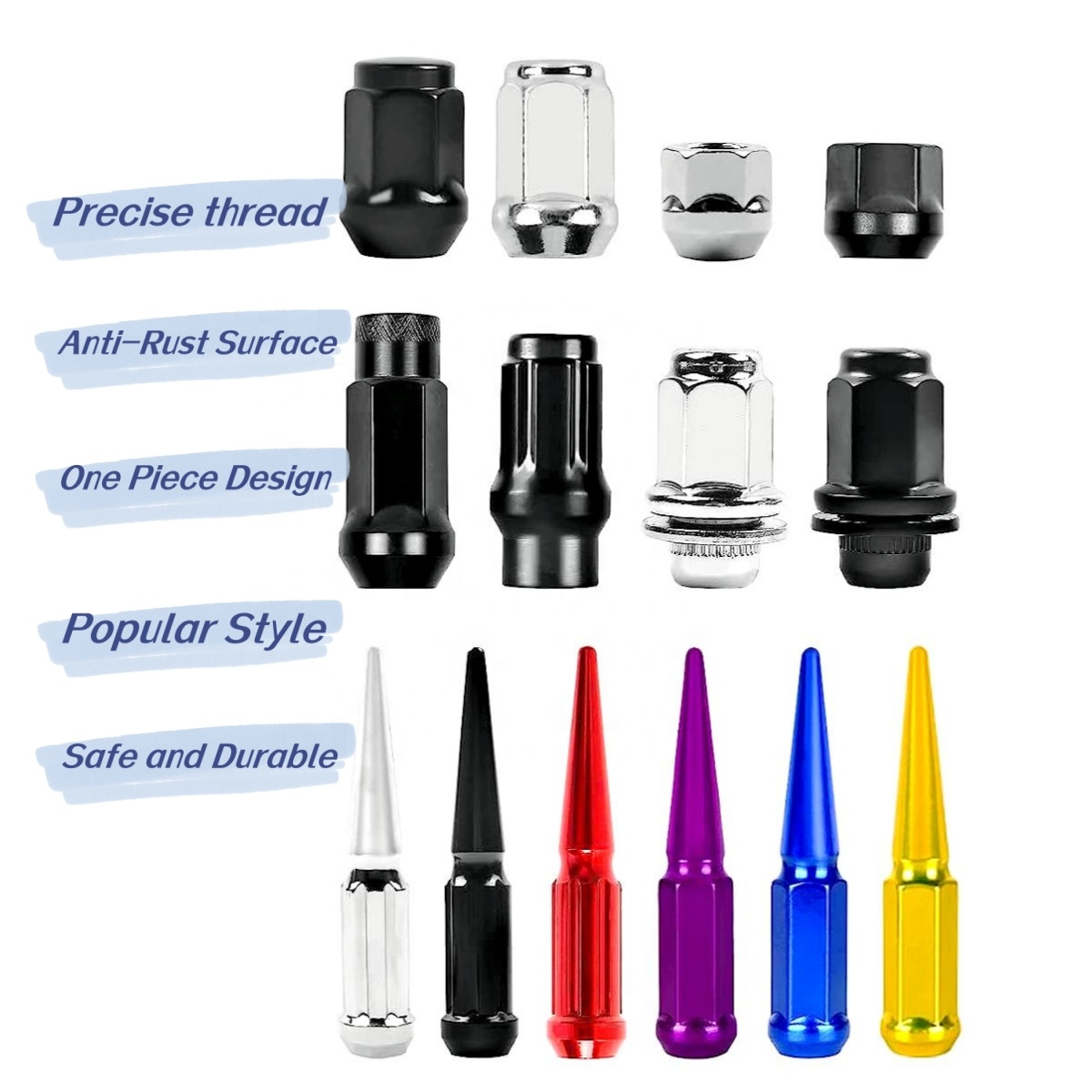
Cold heading covers most standard and many non-standard fasteners: wood screws, chipboard screws, self-tapping and self-drilling screws, drywall and roofing screws, machine screws, set screws, dowel screws and confirmat screws, along with hex bolts, flange nuts and wheel nuts in the property classes used for automotive and structural work.
Multi-station forming keeps cycle time in seconds — the reason unit cost drops sharply once tooling is amortized.
CNC turning and milling remove material from bar stock under program control. The economics are the mirror image of cold heading.
A CNC program can be written and proven in hours. For a prototype, a bridge order, or a part with geometry that cannot be upset — deep undercuts, complex internal bores, eccentric features — CNC is the only practical route. You pay a higher unit cost, but you pay almost nothing up front, and you are not locked into a die you may need to change.
CNC work routinely holds tolerances that cold heading cannot reach without secondary operations. When a drawing specifies a shoulder diameter, concentricity or a threaded length in the sub-0.05 mm band, CNC turning or a hybrid route — cold-head the blank, then machine the critical feature — is usually the correct answer. The mistake is paying for CNC precision on a feature that only needs to pass a go/no-go thread gauge.
The table below sets out the trade-offs a buyer actually has to weigh. Treat the break-even band as directional: the exact crossover depends on part size, material and how many secondary operations the part needs.
|
Factor |
Cold heading |
CNC machining |
Recommendation by volume |
|
Tooling cost |
One-time die and punch set per part |
Program setup only, no hard tooling |
Under ~10,000 pcs/yr: CNC |
|
Unit cost |
Falls steeply with volume |
Broadly flat per piece |
10,000–100,000 pcs/yr: cold heading |
|
Cycle time |
Seconds per piece |
Minutes per piece |
Over 100,000 pcs/yr: cold heading, dedicated tooling |
|
Dimensional tolerance |
Standard tolerances per DIN / ANSI |
Sub-0.05 mm achievable |
CNC for critical features regardless of volume |
|
Material utilization |
Very high, minimal scrap |
Higher scrap from chip removal |
Cold heading on costly alloys |
|
Material capability |
Carbon, alloy and stainless wire |
Any machinable bar stock |
CNC for titanium, small-batch exotic alloys |
|
Design change cost |
New or modified die |
Program edit |
CNC for designs still in flux |
|
Surface finish |
As-formed to plated |
As-machined to plated |
Either, depending on cosmetic requirement |
Two practical readings of this table. First, the crossover is driven by tooling amortization, not by process speed alone: on a part selling for a few cents, a die set is repaid quickly, while on a low-volume specialty fitting it never is. Second, the two processes are complements, not rivals. Many of the custom parts we run at Pinghu Hengke are cold-headed for the shank and head, then machined or thread-ground on the one feature where the drawing demands tighter control.
Four questions resolve most process decisions:
One risk to manage explicitly: when a supplier quotes a suspiciously low price for a genuinely custom part, confirm which process they intend to use. Cutting a thread instead of rolling it, or substituting a lower property class, is a common way to make a number work, and it shows up as a field failure rather than a failed incoming inspection.
There is a second discipline worth imposing on your own RFQ process. Ask every supplier to state three things in writing alongside the price: the manufacturing process, the property class, and the plating specification. A price is only comparable when those variables are fixed. Two quotes for the "same" M10 shoulder bolt can legitimately differ by a factor of ten because one is cold-headed from wire in property class 8.8 with clear zinc, and the other is turned from bar stock in 316 stainless. Quoting without naming the variables is the fastest way to end up comparing two different products.
1. Cold heading wins on unit cost and fatigue performance once volume justifies tooling.
2. CNC wins on flexibility, prototypes and sub-0.05 mm features — and can be combined with cold heading.
3. Choose the process from your critical feature and annual volume, then confirm the supplier intends to run it that way.
Have a drawing you need quoted in both processes?
Send your PDF drawing and get a tooling quote plus FOB price within 24 hours →
Ask for our cold-heading capability sheet covering property classes, wire diameters, thread rolling and available surface treatments.