
 EN
EN
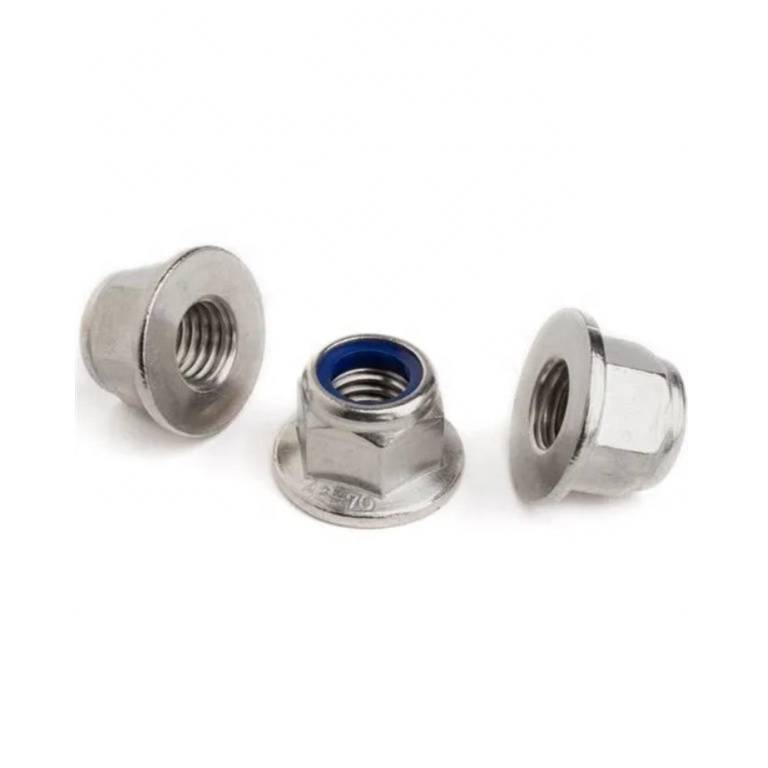
Vibration Resistance: How Flange Nuts Prevent Self-Loosening
Locking Mechanism: Integral Flange and Radial Friction Under Dynamic Loads
Flange nuts with integral design stop from loosening on their own thanks to a special locking system made to handle moving parts and changing conditions. When installed, these nuts come with a built-in washer that spreads out pressure across the surface they sit on, which helps fight off any turning motion. At the same time, the bottom of these nuts has little teeth that dig into materials that aren't too hard, creating tiny dents that hold things in place even when there's lots of shaking around. Standard nuts typically can't keep up with this kind of stress. During tests on car suspensions, setups with flange nuts lasted well over 500 hours under intense vibrations without losing grip strength. Regular nuts without this flange feature needed tightening again after only about 80 hours of similar treatment.
Flange Nuts vs. Standard Nut + Washer: Performance Comparison in High-Vibration Environments
When it comes to high vibration situations, flange nuts actually beat out those old school nut and washer setups because they stop all that annoying component movement which is basically what causes failures in moving parts. Regular washers tend to move around when things get shaken up, creating little gaps that just make everything come loose faster. With the flange built right into the nut itself, there's constant pressure against whatever surface it's sitting on. Parker Hannifin did some tests back in 2023 and found some pretty impressive results too. Their data shows these special nuts reduce loosening caused by vibrations by about 83%. Plus, workers save time during installation since they don't have to mess with separate washers anymore, cutting down on setup by roughly 40%. And the way the load gets spread out evenly helps protect delicate surfaces from getting damaged. We've seen this work wonders in hydraulic pump systems where the shaking can reach over 15 g RMS. Instead of having to check these connections every month, maintenance folks can now wait three months between checks, which speaks volumes about how reliable these nuts really are when put through their paces.
Enhanced Load Distribution and Surface Protection
Reducing Bearing Stress on Thin, Soft, or Composite Materials
Integrated flanges boost the contact area between components, spreading out clamping forces so they don't concentrate on just one spot of delicate materials. This matters a lot when working with things like thin sheet metal, certain plastics, or composite materials that tend to dent easily or break down over time. Think about car body parts or those sleek electronic housings we see everywhere these days. The flange basically works as a shock absorber for mechanical stress, keeping everything from warping while maintaining how strong the whole structure needs to be. Plus, since it's all part of one piece, there's no chance of washers getting shifted during installation, which cuts down on assembly headaches. That's why engineers keep coming back to this design for projects involving lightweight materials, stuff exposed to moisture, or precision builds where even small damage can spell disaster.
Empirical Evidence: 37% Lower Surface Deformation vs. Standard Nuts (Per ASTM F2454-22)
Testing according to ASTM F2454-22 shows that flange nuts offer better surface protection compared to regular nuts paired with external washers. When subjected to similar clamping forces, these specialized nuts create about 37 percent less surface deformation. The reason? They spread out the pressure more evenly instead of concentrating it at single points. This works well regardless of what materials are involved. We see good performance with aluminum alloys, various engineering plastics, even tough carbon fiber laminates. For things like machine bases or precision mounting setups, this means less warping occurs over time, parts last longer, and there are simply fewer problems showing up in the field. That's why so many engineers specify flange nuts for important applications in infrastructure projects, aircraft components, and medical devices where maintaining exact dimensions and preventing surface damage matters most.
Operational Benefits: Assembly Efficiency and Corrosion Control
Eliminating Separate Washers – Gains in Labor Time, Inventory Simplicity, and Reliability
When we combine the washer directly into the nut design, we tackle those annoying problems everyone faces on the job site: having to place washers manually and dealing with alignment issues during assembly work. What this means practically is fewer steps needed for installation overall, probably around a third to almost half less than traditional methods. That cuts down on labor costs significantly while also making it much less likely someone will forget to put in a washer or position it wrong, particularly when working in cramped spaces or operating automated machinery. From a procurement standpoint, things get simpler too. Instead of managing several different parts numbers for various washers, there's just one item to track. This streamlines inventory management and helps prevent situations where certain sizes become obsolete while others remain in stock. The real advantage comes from that fixed flange feature which stops nuts from rotating even when subjected to heavy vibrations or movement. Regular washers tend to shift over time and eventually cause problems with how joints hold together. With this integrated solution, manufacturers get better reliability over the long haul without needing extra quality control measures during production.
Corrosion Mitigation Through Unified Material Selection and Reduced Galvanic Interfaces
Flange nuts help cut down on corrosion problems because they're made all from one kind of material instead of having different parts join together. These nuts are typically made from stuff like A2/A4 stainless steel or silicon bronze alloys that resist rusting naturally. When using regular nuts and washers made from different metals, we get these unwanted reactions at the connection points. For instance, when a steel nut meets an aluminum washer on top of another aluminum surface, corrosion tends to start right there. With flange nuts, there's just one piece so there aren't those tricky gaps where water and dirt can collect over time. This matters a lot for things like boats or equipment used in chemical plants where moisture is always around. Real world testing shows that systems using flange nuts experience about 60 percent fewer issues related to corrosion than setups with multiple components. What this means practically is longer lasting installations without needing extra protective coatings or special sealants to keep everything working properly.
FAQ
What are flange nuts?
Flange nuts are a type of nut that comes with a built-in washer, designed to distribute pressure evenly across a surface, minimizing loosening and enhancing stability under dynamic loads.
How do flange nuts prevent loosening?
Flange nuts have a special locking mechanism that includes an integral flange and friction surface, which increase resistance against loosening, especially in high-vibration environments.
Why are flange nuts better than traditional nut and washer combinations?
Flange nuts outperform traditional nut and washer setups by maintaining constant pressure against surfaces, reducing loosening caused by vibrations, and simplifying installation. They offer improved stability and protection for delicate materials.
Do flange nuts help in reducing corrosion?
Yes, since flange nuts are typically made from a single material, such as stainless steel or silicon bronze, they avoid galvanic reactions between different metals, reducing corrosion over time.
Where are flange nuts commonly used?
Flange nuts are popular in industries such as automotive, aerospace, hydraulic systems, and construction, where reliability under high vibrations and corrosion resistance are crucial.