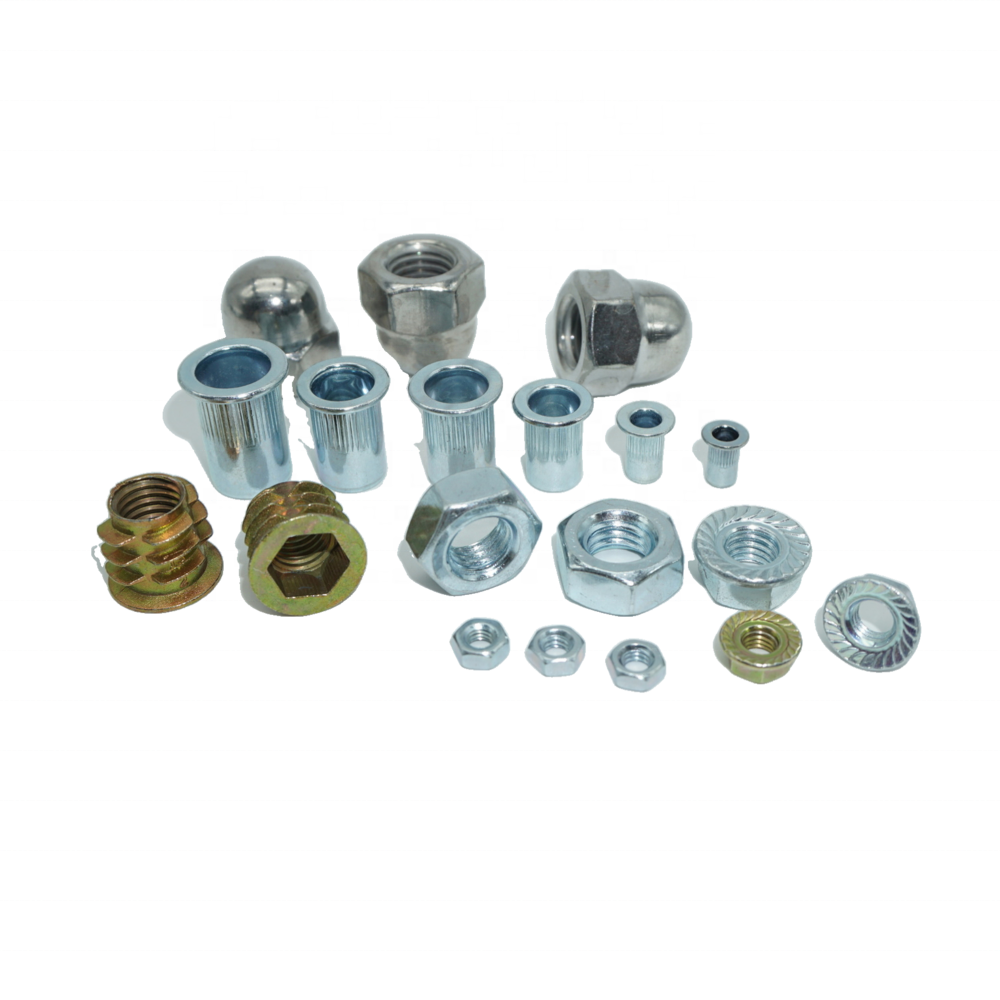
- In the fastener industry, nuts are indispensable components that work with screws, bolts, and studs to create secure, reliable joints. As a professional fastener manufacturer and exporter with over 20 years of experience, Pinghu Hengke Metal Products Factory specializes in producing high-quality nuts, screws, bolts, and advertising nails for global markets, including Europe and the United States. Our nuts are engineered to meet international standards, ensuring compatibility and durability across diverse applications. Understanding the different types of nuts and their specific usage scenarios is crucial for selecting the right fastener solution—whether for automotive manufacturing, construction projects, or industrial equipment. In this guide, we’ll explore the most common nut types, their design features, and practical applications to help you make informed decisions.
- Hex nuts (also known as hexagonal nuts) are the most widely used type of nut in the fastener industry, recognized by their six-sided shape. This design allows for easy tightening and loosening with standard wrenches or socket tools, making them a favorite for both professional and DIY projects. At Pinghu Hengke Metal Products Factory, our hex nuts are crafted from high-strength materials such as carbon steel, stainless steel, and alloy steel, ensuring resistance to corrosion, vibration, and heavy loads.
- Six-sided hexagonal profile for optimal torque transmission.
- Available in coarse thread (UNC) and fine thread (UNF) variants to match different bolt specifications.
- Surface treatments include galvanization, nickel plating, and black oxide coating for enhanced durability and rust resistance.
- Hex nuts are versatile and suitable for almost any application that requires a secure, removable joint. Common use cases include:
- Automotive manufacturing: Securing engine components, chassis parts, and wheel assemblies. As a partner to Fortune 500 enterprises, our hex nuts meet the strict quality standards of leading automobile brands.
- Construction: Fastening steel beams, wooden structures, and electrical fixtures. Their compatibility with standard tools makes them ideal for on-site assembly.
- Industrial equipment: Securing machinery parts, conveyor systems, and piping. The high-strength materials ensure long-term reliability in harsh operating conditions.
- Household appliances: Assembling furniture, electronics, and plumbing fixtures.
- Lock nuts (or self-locking nuts) are designed to resist loosening caused by vibration, temperature changes, or dynamic loads—an issue that plagues standard nuts in high-stress applications. Unlike regular nuts, lock nuts feature built-in mechanisms that create friction or mechanical resistance to keep the nut securely fastened. Pinghu Hengke Metal Products Factory offers a range of lock nut variants, each tailored to specific industry needs.
- Nylon Insert Lock Nuts: Feature a nylon ring inside the nut that creates friction against the bolt thread, preventing loosening. Ideal for applications where corrosion resistance is important, such as marine equipment and electrical enclosures.
- Prevailing Torque Lock Nuts: Manufactured with a deformed thread or curved top that requires consistent torque to tighten and loosen. Suitable for high-vibration environments like automotive engines and heavy machinery.
- Jam Nuts: Thin, low-profile nuts used in pairs to lock each other in place. Often used in tight spaces where standard lock nuts cannot fit, such as aerospace components and precision instruments.
- Lock nuts are essential in applications where joint failure could have serious consequences. Key use cases include:
- Automotive and aerospace: Securing critical components like brake systems, suspension parts, and aircraft engines.
- Industrial machinery: Fastening rotating parts, pumps, and motors that are subject to constant vibration.
- Renewable energy: Securing solar panel mounts, wind turbine components, and battery storage systems.
- Marine equipment: Withstanding saltwater corrosion and wave-induced vibration in boats and offshore structures.
- Wing nuts (or butterfly nuts) are characterized by their two wing-like projections that allow for hand tightening and loosening—no tools required. This design makes them ideal for applications that require frequent adjustments or quick assembly and disassembly. Pinghu Hengke Metal Products Factory produces wing nuts in various materials, including plastic, aluminum, and steel, to suit light-duty and heavy-duty needs.
- Winged design for tool-free operation.
- Lightweight and easy to handle, making them popular for consumer products and temporary installations.
- Available in metric and imperial sizes to match standard bolts and screws.
- Wing nuts excel in applications where speed and convenience are prioritized. Common use cases include:
- Consumer products: Assembling furniture, camping gear, and exercise equipment. Plastic wing nuts are often used in children’s toys for safety and ease of use.
- Construction and maintenance: Securing temporary structures like scaffolding, tarps, and signage. Steel wing nuts are suitable for outdoor use due to their durability.
- Electrical and plumbing: Fastening access panels, conduit fittings, and pipe clamps that may need regular inspection.
- Agricultural equipment: Adjusting parts like tractor attachments, irrigation systems, and fencing.
- Flange nuts (or washer nuts) feature a built-in washer-like flange at the base, which distributes the clamping load over a larger surface area. This design reduces pressure on the fastened material, preventing damage to soft materials like wood, plastic, or thin metal. The flange also provides additional stability, reducing the risk of the nut loosening due to vibration. At Pinghu Hengke Metal Products Factory, our flange nuts are available with serrated or smooth flanges, depending on the application requirements.
- Integrated flange eliminates the need for a separate washer, simplifying assembly.
- Serrated flanges create a non-slip surface, enhancing resistance to loosening.
- Suitable for use with soft materials or surfaces that require load distribution.
- Flange nuts are widely used in applications where surface protection and stability are critical. Common use cases include:
- Woodworking: Fastening wooden beams, furniture frames, and cabinetry without splitting the wood.
- Automotive: Securing body panels, trim pieces, and interior components where surface damage must be avoided.
- Electronics: Fastening circuit boards, enclosures, and delicate components that require gentle clamping.
- HVAC systems: Securing ductwork, vents, and air conditioning units to prevent damage to thin metal sheets.
- Cap nuts (or acorn nuts) feature a domed top that covers the end of the bolt, providing both aesthetic appeal and protection against corrosion, dust, and debris. The closed design prevents moisture and contaminants from entering the thread, extending the life of the fastener. Pinghu Hengke Metal Products Factory offers cap nuts in a range of finishes, including chrome, brass, and stainless steel, to match the aesthetic requirements of different applications.
- Domed top for a clean, finished look.
- Protective design shields the bolt thread from damage and corrosion.
- Available in standard and decorative variants for functional and aesthetic purposes.
- Cap nuts are ideal for applications where appearance and protection are equally important. Common use cases include:
- Furniture and decor: Securing visible components like table legs, handrails, and decorative fixtures.
- Automotive: Enhancing the appearance of custom vehicles, motorcycles, and bicycles.
- Marine and outdoor equipment: Protecting fasteners from corrosion in harsh environments.
- Medical devices: Providing a smooth, hygienic surface for equipment that requires frequent cleaning.
- Selecting the correct nut type depends on several key factors, including load requirements, environmental conditions, assembly method, and material compatibility. Here are some expert tips from Pinghu Hengke Metal Products Factory:
-
Assess Load Capacity: For heavy-duty applications, choose high-strength nuts made from alloy steel or stainless steel. Hex nuts and flange nuts are ideal for high-load scenarios.
-
Consider Vibration Resistance: In vibration-prone environments, opt for lock nuts with nylon inserts or prevailing torque designs to prevent loosening.
-
Evaluate Environmental Conditions: For corrosive environments (e.g., marine, chemical processing), select stainless steel or galvanized nuts with corrosion-resistant coatings.
-
Assembly Method: If tools are unavailable or frequent adjustments are needed, wing nuts are the best choice. For permanent installations, hex nuts or cap nuts are more suitable.
-
Material Compatibility: Ensure the nut material is compatible with the bolt and fastened material to avoid galvanic corrosion. For example, use aluminum nuts with aluminum bolts and steel nuts with steel bolts.
- As a professional fastener manufacturer and exporter, Pinghu Hengke Metal Products Factory is committed to providing high-quality nuts, screws, and bolts that meet the diverse needs of global customers. Our products are exported to Europe, the United States, and other countries, adhering to international standards such as ISO, DIN, and ANSI. Whether you need standard nuts or custom OEM/ODM solutions, our professional technical team is ready to assist you with product selection, design, and after-sales support.
- Nuts are essential components in countless applications, from automotive manufacturing to household products. Understanding the different types of nuts and their usage scenarios is key to ensuring secure, reliable joints and optimizing the performance of your projects. Whether you need hex nuts for heavy-duty industrial use, lock nuts for vibration resistance, wing nuts for quick assembly, flange nuts for load distribution, or cap nuts for aesthetic appeal, Pinghu Hengke Metal Products Factory has the right solution for you. With our commitment to quality, professional technical services, and global trade capabilities, we are your trusted partner for all fastener needs. Visit our website at https://www.hengkefasteners.com/ to learn more about our products and services, or contact our team for personalized support.

 EN
EN